
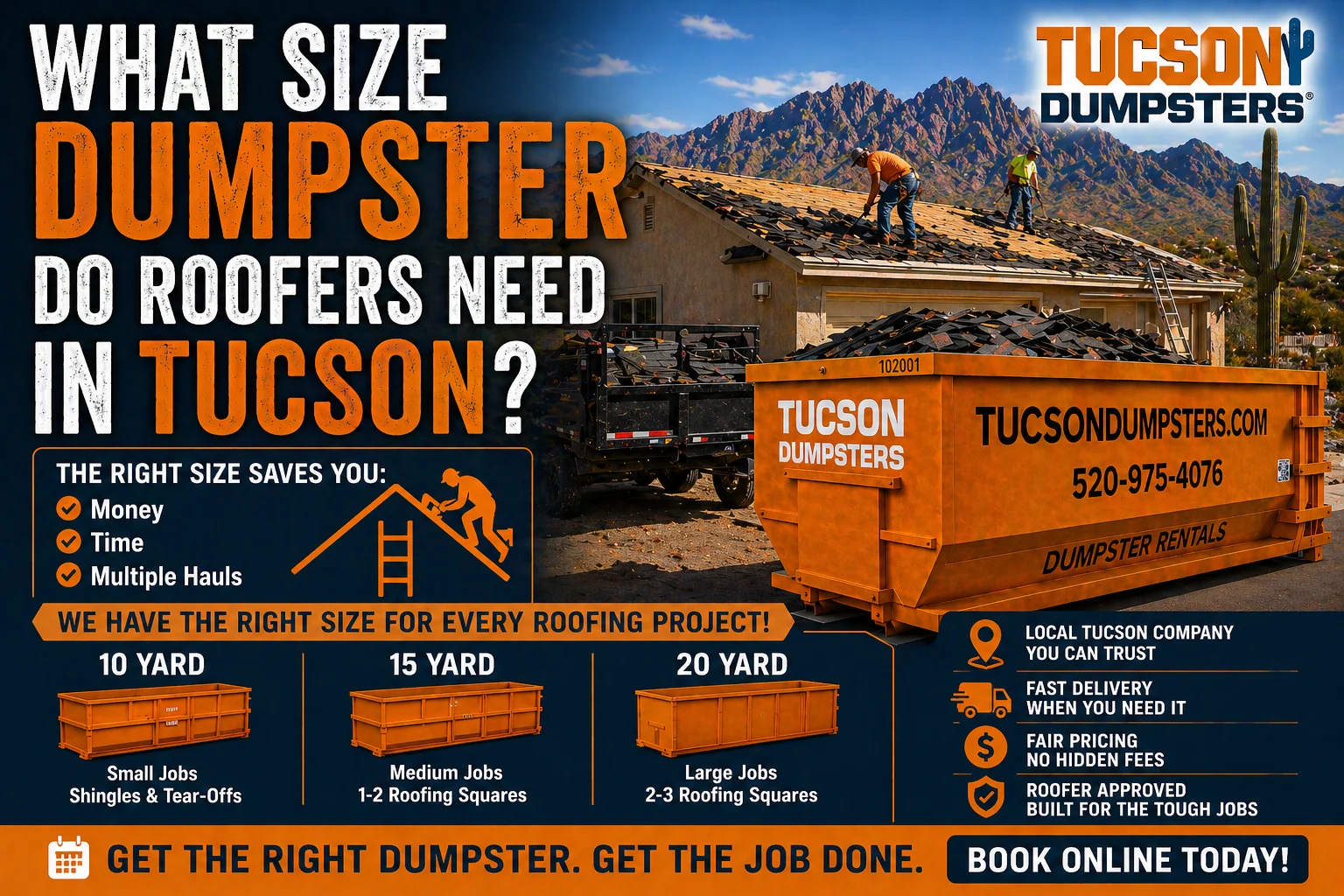
What Size Dumpster Do Roofers Need? (Shingle Tear-Off Guide)
If you’re a roofing contractor planning a tear-off in Tucson, choosing the right dumpster size can make or break your job efficiency.
Pick too small—and you’ll need costly swap-outs.
This guide breaks down exactly what size dumpster roofers need for shingle tear-offs, so you can stay on schedule, avoid overloading, and keep your job site running smoothly.
🏗️ The Best Dumpster Size for Roofing Jobs
For most roofing projects, a 20-yard dumpster is the go-to choice.
Here’s why:
- Fits the majority of residential tear-offs
- Handles heavy asphalt shingles
- Reduces the need for multiple hauls
- Most cost-effective option for contractors
👉 In Tucson, the 20-yard dumpster is the most commonly used size for shingle roofing jobs because it balances capacity and weight perfectly.
Caution:
If you load a 20-yard dumpster to capacity with tile from a roof tear-off, it will almost always be too heavy to safely haul. Tile roofing material is significantly heavier than asphalt shingles, and a full container can exceed truck weight limits. When this happens, the driver won’t be able to pick it up, and the crew will need to offload material to reduce weight, resulting in lost time, added labor costs, and delays on the job.
📏 Roofing Dumpster Size Guide (By Project Type)
Choosing the right dumpster depends on the size of the roof and the number of layers being removed.
Small Roofs (Garage, Patio, or <1,500 sq ft)
- Recommended size: 10 yard dumpster
- Ideal for light tear-offs or single-layer shingles or tile roofs
Medium Roofs (1,500–2,500 sq ft)
- Recommended size: 15 or 20 yard dumpster
- 20 yard is safer if dealing with multiple layers
Large Roofs (2,500+ sq ft)
- Recommended size: 20 yard dumpster
- Best for full shingle roof tear-offs with heavier loads
📊 How Many Roofing Squares Fit in a Dumpster?
Roofing contractors typically measure jobs in squares (1 square = 100 sq ft).
Here’s a simple rule of thumb:
- 10 yard dumpster: ~15–20 squares
- 15 yard dumpster: ~20–30 squares
- 20 yard dumpster: ~30–40 squares
⚠️ Important: The number of squares depends heavily on:
- Number of shingle layers
- Type of materials (asphalt vs tile)
- Debris like underlayment and nails
⚖️ Understanding Shingle Weight (Critical for Roofers)
Weight matters more than volume when it comes to roofing dumpsters.
- Asphalt shingles weigh 200–300 lbs per square
- A full roof tear-off can easily exceed several tons
That’s why many contractors prefer a 20 yard dumpster—it gives enough space without risking overload issues.
🚫 Avoid Overloading Your Dumpster
Overloading a dumpster can slow down your project and lead to extra fees.
Here’s how to avoid it:
- Don’t fill above the top rail
- Spread the weight evenly throughout the container
- Choose a slightly larger size if unsure
- Account for multiple layers of shingles
👉 When in doubt, go with a 20-yard dumpster—it’s the safest and most efficient option for shingle roofing jobs.
🔁 When Roofers Should Consider Swap-Outs
For larger or multi-day roofing projects, a single dumpster may not be enough.
Swap-outs are ideal when:
- You’re working on large residential or commercial roofs
- The dumpster fills up mid-project
- You want to keep the job site clean and efficient
- If the load will be over 12,000 lbs or 6 tons, a swap out is a must to prevent the dumpster from being too heavy to host and haul off
Quick swap-outs help roofing crews stay productive without delays.
💰 Why Dumpster Size Matters for Roofing Costs
Choosing the right size directly impacts your bottom line:
- Too small = extra hauls or downtime
- Too large = unnecessary cost
- Right size = efficient, predictable pricing
Many roofing contractors prefer flexible pricing models where they only pay for what they use—especially on jobs where weight can vary.
🚚 Local Tip for Tucson Roofing Contractors
In Tucson, roofing jobs move fast—especially during peak seasons.
Working with a local dumpster rental company ensures:
- Fast delivery (often same or next day)
- Reliable pickup when the job is done
- Flexible rental periods for longer projects
This keeps your crew moving and your projects on schedule.
🧠 Pro Tip: When in Doubt, Go Bigger
If you’re unsure which size to choose, most experienced roofers will tell you:
👉 Go with a 20 yard dumpster
It’s the most versatile option and prevents costly delays from running out of space.
✅ Final Thoughts: Choosing the Right Roofing Dumpster
The right dumpster size helps you:
- Stay on schedule
- Avoid extra costs
- Keep your job site clean
- Maximize crew efficiency
For most roofing tear-offs in Tucson, a 20 yard dumpster is the best choice—but smaller projects may benefit from a 10 or 15 yard option.
Additional Resources:
📞 Ready to Book a Roofing Dumpster in Tucson?
If you’re a contractor looking for fast, reliable dumpster service for roofing jobs, choosing the right size is step one.
Make sure you work with a company that understands roofing timelines, debris weight, and job site efficiency—so you can focus on getting the job done.
How to Rent Our Dumpsters in 4 Easy Steps
1. Book Dumpster Rental
Book your dumpster online. Or call today, and we’ll find the right-sized dumpster rental for your project at an affordable price and schedule your dumpster delivery.
2. We Deliver Dumpster
We deliver your dumpster at a time that works for your project. Please ensure the drop-off area is clear.
3. Fill Up Your Dumpster
Fill up your dumpster with the acceptable waste. Not sure if you can put a particular item in your roll-off container? Give us a call to find out what’s accepted in your are
4. Schedule Your Pickup
When you’re done using your dumpster, give us a quick call or text, and we will come and pick up the dumpster.
We Serve The Following Areas
Tucson Dumpsters proudly provides fast, reliable dumpster rentals throughout Tucson and many surrounding communities. We deliver to Marana, Oro Valley, Vail, Sahuarita, Green Valley, Catalina Foothills, Rita Ranch, Corona de Tucson, Picture Rocks, and many other nearby areas. Whether you’re tackling a home cleanout, remodeling project, yard cleanup, roofing job, or construction project, our team is committed to on-time delivery, transparent pricing, and exceptional customer service. If you’re located in or around the Tucson metro area, we’re ready to help you find the right dumpster for your project.
NOTE: Additional travel fees outside Tucson may vary based on location and required driving distance.